Department of Fisheries
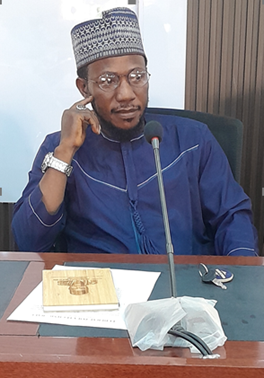
Buhari Jibrin
Department of FisheriesM.Sc. (MAU. YOLA), B. Tech. (MAUTECH. YOLA), ND (COAJ).
Fisheries
A polytechnic Fisheries department provides practical training in fish production, aquaculture management, fish breeding, and aquatic resource management. It equips students with technical and entrepreneurial skills needed for sustainable fisheries development and food production.
ABOUT
The Department of Fisheries Technology was established on 15th December, 2025 and is currently awaiting interim accreditation to commence National Diploma programme in Fisheries Technology in the 2026/2027 academic session. It is hoped that full accreditation will subsequently be granted by the National Board for Technical Education in the coming years.
The Department of Fisheries Technology is currently headed by Mr. Buhari Jibrin, a pioneer, in an acting capacity. The Department was established with the aim of producing competent and entrepreneurial graduates equipped with both practical and theoretical knowledge in fisheries and aquaculture.
Despite its recent establishment, the department is steadily developing and has been provided with NBTE-standard facilities to support effective teaching, research, and practical training. These facilities include a Fish Hatchery Unit, Fish Nutrition and Feed Technology Lab, Aquaculture Demonstration Ponds, Fish Processing and Preservation Unit, Fisheries Biology Lab, Water Quality Analysis Lab, and Fish Health and Disease Control Unit.
In line with the department’s practical-oriented philosophy, students will be exposed to intensive hands-on training and SIWES industrial attachment to enhance their technical skills, professional competence, and employability in the fisheries and aquaculture sector. We combine classroom instruction with intensive practical training to ensure graduates are industry-ready.
Vision
To be a leading Centre of excellence in fisheries and aquaculture training in Nigeria and beyond.
Mission
To train skilled, innovative, and self-reliant technicians capable of advancing sustainable fisheries development
Programme Goal
The National Diploma programme in Fisheries Technology is designed to produce technicians who will be able to apply modern techniques to rear fish and other aquatic animals at commercial levels; participate in freshwater, brackish water and marine fishing; processing, preservation, storage and marketing of fish on large scale for human consumption and other purposes.
Programme Objectives
- Assist in determining suitable environment, planning, layout construction and development of fish culture facilities.
- Carry out all aquaculture practices.
- Employ modern techniques in stocking, feed preparation and associated management practices in Aquaculture.
- Assist in the construction and operation of simple fish processing and preservation equipment.
- Construct, operate and maintain different types of simple fishing gears and crafts (nets, traps, lines out board engines etc.).
- Assist in the construction of aquarium and managing of ornamental fishes.
- 7. Assist in carrying out fisheries survey and data collection.
- Assist in fisheries extension and cooperation.
- Set up and manage a fishery-related business.
Entry Requirements
Applicants with the following qualifications may be considered for admission into the National Diploma programme in Fisheries Technology:
- General Certificate of Education (GCE) ordinary level, Senior Secondary School Certificate Examination (WASSCE) or their equivalents with credit passes in five subjects relevant to the programme at not more than two sittings. The subjects must include the following: English language, Mathematics, Chemistry, Biology/Agricultural Science and any one from the following subjects: Geography, Economics, Physics and Statistics.
- Minimum score in UTME.
STRUCTURE OF THE PROGRAMME
The National Diploma in Fisheries Technology is a terminal programme and is structured to last for two years (four semesters). This includes three to four months of Supervised Industrial Work Experience Scheme (SIWES) at the end of first year or the first two semesters of the programme.
Curriculum
The curriculum of the ND programme consists of three main components. These are:
- General Studies / Education
- Foundation Courses
- Professional Courses
- Student Industrial Work Experience Scheme (SIWES)
Curriculum Structure
The structure of the ND programme consists of four semesters of classroom, laboratory and workshop activities in the polytechnic/college and a semester (3 – 4 months) of supervised industrial work experience scheme (SIWES). Each semester shall be of 17 weeks of teaching i.e. recitation, practical exercise, quizzes, test etc. and 12 – 16 weeks SIWES shall take place at the end of the second semester of the first year.
Preview More on PDFGeneral Education Courses
These courses shall include:
Foundation Courses
These are courses in:
- Economics
- Mathematics
- Pure sciences
- Technical drawing
- Descriptive geometry
- Statistics, etc.
The number of hours will vary with programme and may account for about 10 – 15% of the total contact hours.
Professional Courses
These are courses that give the student theory and practical skills they need to practice their field of calling at the technician/technologist level. These may account for between 60 – 70% of the contact hours depending on programme.
Student Industrial Work Experience Scheme
The Student Industrial Work Experience Scheme (SIWES) shall be taken during the long vacation following the end of the second semester of the first year. See details of SIWES in Guidelines to SIWES.
Preview More on SIWESGrading of Courses
Courses shall be graded as follows:
| Marked Range | Letter Grade | Weighting |
|---|---|---|
| 75% and above | A | 4.00 |
| 70% – 74% | AB | 3.50 |
| 65% – 69% | B | 3.25 |
| 60% – 64% | BC | 3.00 |
| 55% – 59% | C | 2.75 |
| 50% – 54% | CD | 2.50 |
| 45% – 49% | D | 2.25 |
| 40% – 44% | E | 2.00 |
| Below 40% | F | 0.00 |
Classification of Diplomas
Diploma can be classified as follows:
| Distinction | Upper Credit | Lower Credit | Pass |
|---|---|---|---|
| CGPA of 3.50 and above | CGPA of 3.00 – 3.49 | CGPA of 2.50 – 2.99 | CGPA of 2.00 – 2.49 |
Accreditation
Each programme offered at ND level shall be accredited by NBTE before the diplomats can be awarded the diploma certificates. Details about the process of accrediting a programme for the award of the ND or HND are available from the Executive Secretary, Programmes Department, National Board for Technical Education, Plot B, Bida Road, P.M.B. 2239, Kaduna, Nigeria.
ACCREDITATION AND QUALITY ASSURANCE STATEMENT
This programme is designed in line with the standards and benchmark requirements of the National Board for Technical Education for quality technical education delivery, practical competence, and industry relevance.
CONDITIONS FOR THE AWARD OF THE NATIONAL DIPLOMA
Institutions offering accredited programme will award the National Diploma to candidates who successfully completed the programme after passing prescribed coursework, examination, diploma project and the Supervised Industrial Work Experience. Such candidates should have completed a minimum of 72 and 80 semesters – credit units depending on the programme. All terminal National Diploma and Higher National Diploma examinations must be externally moderated. In grading the award, the board’s unified grading system should be applied.
Guidance Note for Teachers Teaching the Programmes
The new curriculum is drawn in unit courses. This is keeping with the provision of the National Policy on Education which stress the need to introduce the Semester credit units which will enable a student who so wish to transfer the units already completed in an institution of similar standard from which he/she is transferring.
In designing the units, the principle of the modular system by product has been adopted; thus making each of the professional modules, when completed provides the students with technician operative skills, which can be used for employment purposes. As the success of the credit unit system depends on articulation of programmes between the institutions and industry, the curriculum content has been written in behavioural objectives, so that it is clear to all the expected performance of the student who successfully completed some of the courses or the diplomates of the programme.
There is a slight departure in the presentation of the performance based curriculum which requires the conditions under which the performance are expected to be carried out and the criteria for the acceptable levels of performance. It is a deliberate attempt to further involve the staff of the department teaching the programme to write their own curriculum stating the condition existing in their institution under which the performance can take place and to follow that with the criteria for determining an acceptable level of performance. Departmental submission on the final curriculum may be vetted by the academic Board of the institution.
Our aim is to continue to see it that a solid internal evaluation system exists in each institution for ensuring minimum standard and quality of education in the programmes offered throughout the polytechnic system and similar post – secondary technical institutions.
The teaching of the theory and practical work should, as much as possible, be integrated. Practical exercises, especially those in professional courses and laboratory work should not be taught in isolation from the theory. For each course, there should be a balance of theory to practice in the ratio of 50:50 or 60:40 or the reverse.
Explore the Department
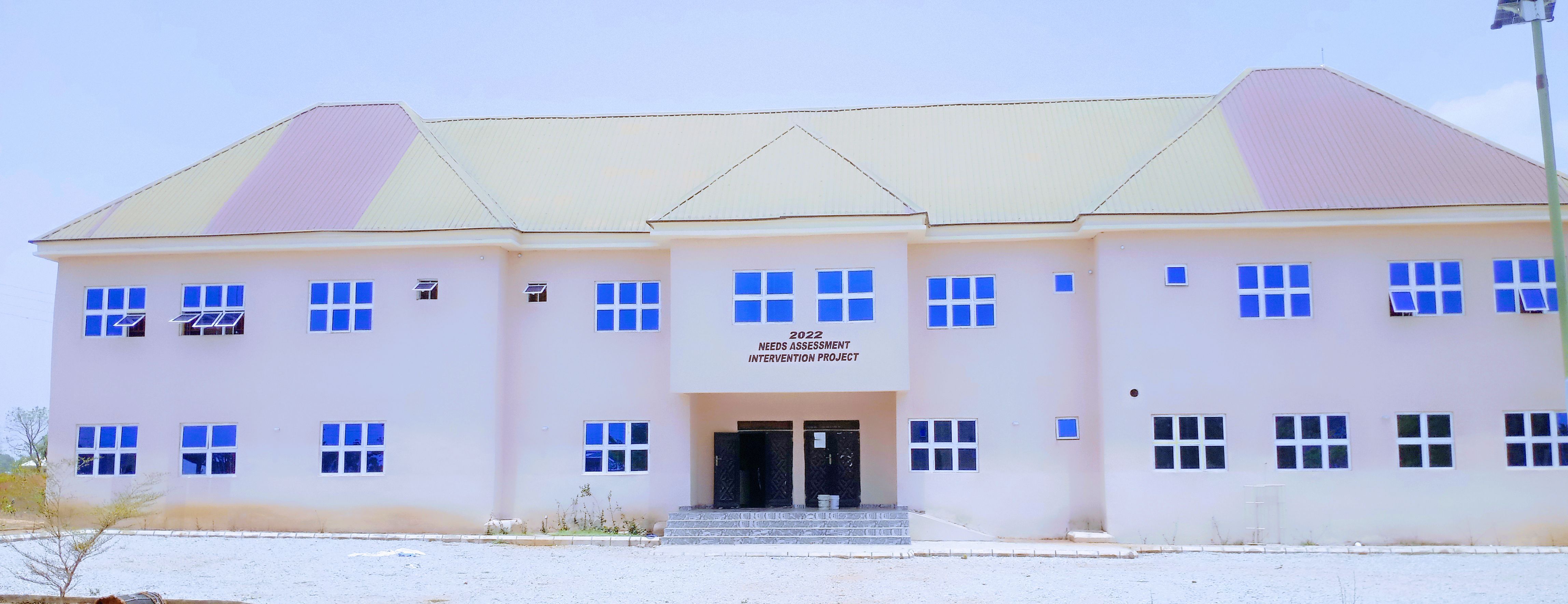
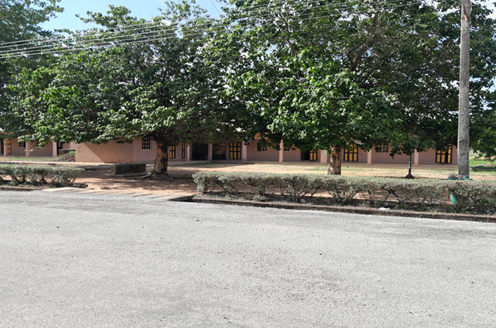
Staff Members'
Buhari Jibrin
Lecturer IHabibat Abdul’rasheed
Assistant LecturerAsemapenda Iveren Doowuese
Assistant LecturerAbdulkadir Adamu
Assistant LecturerKhalid Ibrahim Jalo
Assistant LecturerKabiru Mu’azu
Admin. Officer IContact Information
Department of Fisheries Technology
School of Agricultural Technology
Federal Polytechnic Bali, Taraba State, Nigeria
- Phone: +234 8137 60 9005 / +234 8033 83 7089
- Email: fishtech4fpb@gmail.com